

The first hints of dawn had n’t yet traduced the horizon in KwaZulu-Natal, South Africa.
In the dim, artificial gleam of a original tavern in Mthwalume, the final, hopeless hours of a Saturday night bled into a Sunday morning that would noway come for nine souls. The familiar sounds of chinking spectacles and muffled music were annihilated in a unforeseen, merciless storm of gunfire.
When the silence returned, heavier and further terrible than any noise, it carried with it a grim, deadening verity South Africa had been visited by another bar butchery, another chapter in a putatively endless story of collaborative trauma and collaborative bloodletting. This was n’t an isolated crime; it was a symptom of a nation hemorrhaging, where nine further lives were stolen before daylight.
The deconstruction of a Agony Unfolding in the Dark
Details, as they so frequently do in the immediate fate of similar horror, surfaced in fractions through the fog of shock. Patrons, gathered in a space of presumed fellowship and respite, were ambuscaded by multiple markswomen who reportedly arrived in two vehicles. The attack was nippy, calculated, and brutal. The assaulters opened fire indiscriminately, turning a place of rest into a killing bottom.
The fate was a scene of visceral chaos.
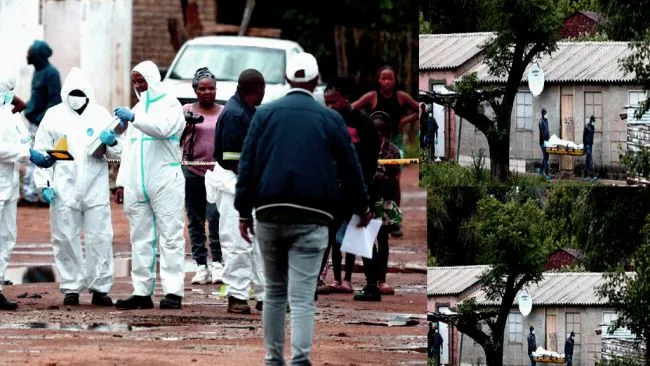
exigency services arrived to defy a tableau of inenarrable violence — bodies fallen where they stood or sat, the air thick with the metallic scent of blood and spent charges. South Africa Nine people were declared dead at the scene, their stories suddenly and violently concluded.
Others, wounded and traumatized, were rushed to hospitals, their physical and cerebral scars a endless testament to the night the markswomen came. The survivors, substantiations to unconceivable horror, were left with recollections that would hang every shadow, every unforeseen sound.
A Name, A Number, A Nation’s impassiveness
The captions reduced the tragedy to a chillingly effective expression” Nine Killed in KZN Tavern Firing.” But within that number taradiddle nine canceled worlds. South Africa A father who stepped out for a single beer. A youthful woman celebrating a friend’s birthday. A worker blowing off brume after a long week. Grandchildren, parents, siblings, musketeers — each victim was a thread in a social fabric now torn.
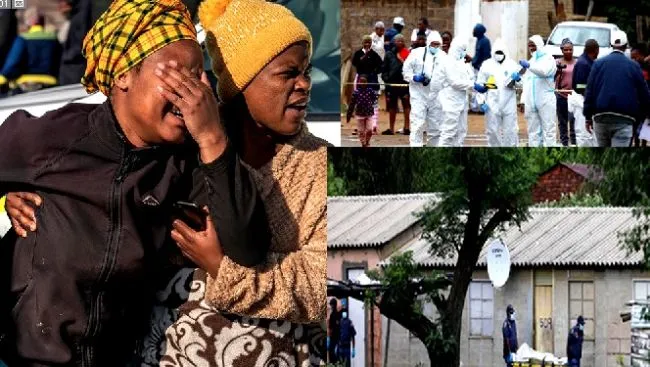
Their individualities, yet to be completely released to a grieving public, represent the profound, particular cost that statistics can noway capture. For their families, the daylight brought not light, but an eternal darkness, the launch of a lifelong judgment of grief and unanswered questions.
The Sinister Echo A Recurring National Agony
The Mthwalume butchery is n’t an aberration. It’s a ghastly echo, the rearmost beat in a grim meter of mass blowups that have targeted South Africa’s social spaces.
Readmore The Citizenship Purge: Inside the Trump Administration’s
Katlehong, 2020 12 people shot dead.
Each event follows a horrifyingly analogous script fortified men, late at night or in the early morning, attacking venues where people are socially congregated and vulnerable. This pattern points beyond arbitrary crime to commodity more systemic and minatory. These attacks are acts of extreme, theatrical violence designed to terrify entire communities.
The Murky Motives A distraction of Criminal Enterprise
In the vacuum of sanctioned evidence, enterprise about the” why” swirls, drawing from the known pathologies of South Africa’s deep- seated felonious demiworld. The likeliest motives paint a picture of a society where violence is the primary currency of disagreement resolution
Taxi Violence Retribution KwaZulu- Natal is a notorious center of South Africa’s brutal hack wars. Rival associations fight for control of economic routes with assassination and mass murder as standard tactics. Taverns are frequently linked to or patronized by specific coalitions, making them soft targets for retaliatory strikes.
Illegal Alcohol Trade Turf Wars
The shebeen and tavern assiduity, especially in townships, is amulti-billion rand informal frugality. Control over the distribution of alcohol, legal or lawless, is fiercely queried. A megahit on a rival’s establishment is a direct assault on their profit and authority.
highway robbery and” Protection” Rackets Felonious syndicates frequently force businesses to pay for” protection.
Turdown can affect in violent discipline, serving as a warning to others.
Political and Factional Intimidation In some regions, original political dynamics intertwine with felonious enterprise. Violence can be used to blackjack choosers or exclude opponents in community structures.
Whatever the specific detector, the underpinning cause is the same the normalization of high- quality, reequipped violence as a tool for South Africa conducting business, settling scores, and projecting power in a environment of weak state authority.
The Failing Social Contract wrathfulness in the Aftermath How do hitmen operate with similar immunity? When will it end?
T.here’s a palpable, stewing rage against a perceived binary failure of the state
Failure to Prevent Intelligence failures are striking. The complication of these attacks suggests planning. The harmonious modus operandi points to given South Africa felonious patterns. Yet, forestallment seems absent.
Failure to Solve and Convict The conviction rate for these high- profile mass blowups is dismally low. Apprehensions are rare, successful executions rarer still. This creates a culture of immunity where perpetrators believe they can act without consequence.
This corrosion of trust is maybe the most dangerous outgrowth. When citizens believe the state can not or wo n’t cover them in their most vulnerable moments of socialization, the veritably fabric of the collaborative contract unravels.
Beyond the Security Crackdown defying the Hydra
The government’s ritual response a high- position police task platoon, pledges of a nippy disquisition, and increased visibility — feels decreasingly like a South Africa palliative for a metastatic complaint. working this single case, while pivotal for justice, does nothing to address the ecosystem that types similar violence.
