

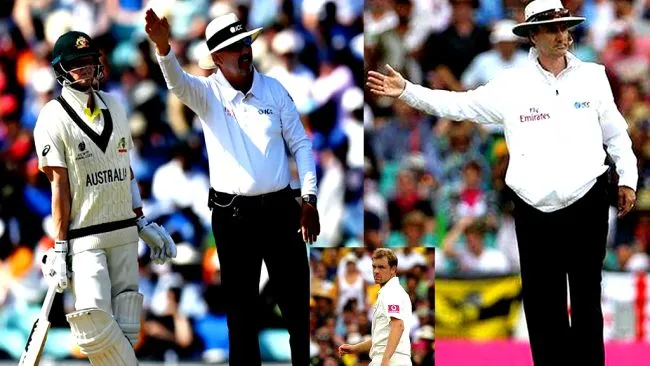
The Ashes has always been a theater of raw passion.
Where icons are forged in searing pace and villains are painted by the stroke of a club or the devilry of a ball. Yet, in the vital Day- Night Test at Adelaide Oval, a new, unexpected antagonist surfaced from the murk of the players’ pavilion. It was n’t a fiery fast bowler or a swashbuckling batsman; it was the Decision Review System( DRS), the truly technology designed to count injustice.
Far from being a silent arbitrator of verity, DRS came a central, plaguing character in the drama, casting a pall of confusion, contestation, and profound mistrustfulness over the contest, and in doing so, hovered to undermine the credibility it was erected to uphold.
Readmore Pitch, Player, and Paradigm Shift: The Bold New Blueprint for PSL’s
This was n’t a story of a single” boner” corrected.
It was a waterfall of borderline, soul- crushing opinions where the promised clarity of technology dissolved into a fog of probabilistic interpretation. The” Third Umpire Call” loophole, the forensic yet fallible Hawk- Eye protuberance, and the agonizing real- time suspension converted DRS from a tool of resolution into a source of empirical sporting angst. In Adelaide, technology did not break the mortal problem; it amplified it.
The Promise vs. The Adelaide Reality A System Under Stress
DRS was introduced with a noble accreditation to annihilate the” boner” the blatantly wrong decision that could change a match. Its success in this regard is inarguable. still, Adelaide exposed its critical, maybe essential, excrescence it is ill- equipped to deliver definitive justice in the realm of theultra-marginal.
The system is erected not on absolute verity, Third Umpire but on a calculated vaticination within a periphery of error. When the stakes are the Ashes, and every decision feels life- or- death, that periphery of error feels like a flume of mistrustfulness.
In this Test, a series of vital moments hung entirely on this probabilistic cliff
The LBW That Was and Was n’t The torment of” Third Umpire Call” was showcased severely. A batter, stonewalling, is struck on the pad. The on- field arbiter says” not out.” The fielding platoon reviews. Hawk- Eye shows the ball trimming the veritably remotest splinter of the bails.
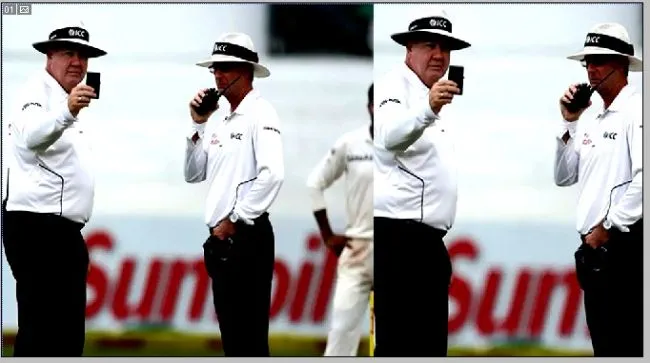
The verdict” Third Umpire Call,” the original decision stands. The fur side breathes; the contending side is incensed. Reverse the on- field call, and the outgrowth is reversed, yet the visual substantiation is identical.
The system, in its attempt to admire the on- field functionary, created a logical incongruity where the same ball can be both” out” and” not out” depending on a human’s split-alternate conjecture. In Adelaide, these calls felt ceaseless, each one a bitsy fracture in the match’s integrity.
The Snicko Specter The Sound of query
The UltraEdge( Real- Time Snickometer) technology, which detects edges using sound and vibration, came a source of torment rather than clarity. knockout, Third Umpire pixel- sized harpoons appeared on the waveform milliseconds after the ball passed the club. Were they the sound of leather on willow, or leather brushing pad, or indeed club hitting ground?
The third arbiter, cloistered in a dark room, was forced to play forensic audio critic, interpreting waveforms with the weight of an Ashes series upon him. The” conclusive substantiation” standard sounded to buckle under the pressure, leaving players and suckers likewise feeling that the outgrowth was a lottery of aural interpretation.
The mortal Element The Third Umpire Solitary Torment
Amidst this technological storm stood the most tortured figure of all the third arbiter. Assigned with being the mortal practitioner of this amiss digital mystic, they were placed in an insolvable position.
Their part converted from a critic of clear miscalculations to a high- clerk of probability, decoding Hawk- Eye’s protrusions and Snicko’s spectral traces.
The isolation of the role was palpable. Third Umpire With no crowd noise, only the sterile hum of equipment and the tense silence of waiting players, they had to make epochal decisions based on data that was, by its nature, uncertain. The protocol demanded certainty where the technology could only offer likelihood.
This pressure-cooker environment, broadcast to millions with agonizing slowness, turned the review process into a theatrical torture for all involved. The villain wasn’t the person in the chair, but the untenable position the system placed them in.
The Psychological Warfare DRS as a Tactical Mutant
Beyond the specialized failures, Third Umpire DRS shifted the veritably psychology of the game in Adelaide. It was no longer just a corrective tool; it came a strategic armament of intimidation and gambling.
The” Poker Face” Review Captains were no longer just reviewing clear crimes. They were using reviews as politic scars, laying on” Third Umpire Call” perimeters to break a batter’s attention or shatter a cooperation, indeed when they knew the decision was borderline. The review came a cerebral dislocation as much as a judicial appeal.
The corrosion of Acceptance
The primitive, immediate acceptance of the arbiter’s cutlet — a sacred part of justice’s fabric — has eroded. Batsmen now loiter, looking at their dressing room for a signal.
The robotic festivity of a gate is put on pause, firmed by the eventuality for review. Adelaide saw this palsy reach its peak, with the natural inflow of the game constantly intruded by a collaborative vacillation, a staying for the digital verdict from the unseen room.
The Spectator’s Dilemma Eroding the Joy of Certainty
For the suckers, both in the colosseum and at home, the experience was poisoned. The raw joy of a gate or the despair of a redundancy came provisional, Third Umpire subject to a 90-alternate detention and a complex visual. The collaborative, immediate response was shattered.
rather, crowds fell into a confused hush, gaping at giant defenses, trying to interpret the same uncertain data as the functionary. The participated, emotional certainty of the game was replaced by a collaborative specialized adjudication. The ill of DRS lay in its theft of justice’s visceral, emotional lucre.
