

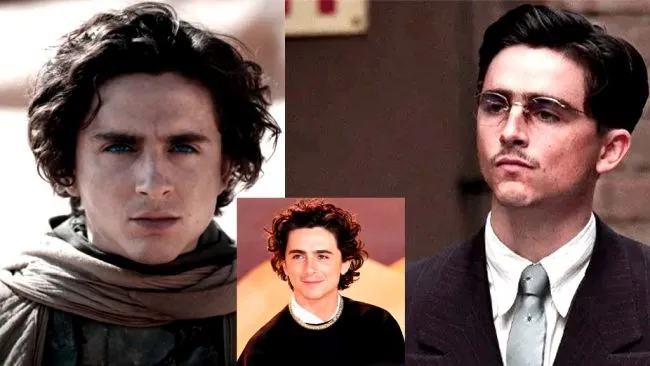
In the age of oversharing, where celebrity is a 24/7 performance broadcast from Instagram Stories and shooters long lenses.
Timothée Chalamet exists as a witching anomaly. He’s a global megastar with the air of a phantom, a leading man who designedly obscures the script of his own off- screen life. As he ascends to a new stratum of fame — headlining billion- bone votes like Dune and Wonka — Chalamet is n’t succumbing to the predictable narrative of Hollywood’s leading man.
Rather, he’s consummately executing a different play he’s not wearing a mask to cover the man; the actor is methodically getting the mask, weaving an purposeful, elegant riddle that’s rewriting the veritably rules of ultramodern celebrity.
This is n’t an accident of shyness or a PR platoon’s constraint strategy.
It’s a conscious, cultural curation of absence. In a business impregnated with confessional podcasts and curated” authenticity,” Chalamet’s power derives from what he withholds, what he implies, and the witching
space he leaves for the followership’s imagination to bat. He’s erecting a persona not through disclosure, but through enigmatic suggestion.
Readmore When the Clown Stopped Smiling: Rowan Atkinson’s
The design of the Enigma Strategic Silence as a Brand
Chalamet’s approach dismantles the traditional celebrity playbook, which demands a transactional exchange of sequestration for hype.
1. The Cryptic, Not Confessional, Interview.
He grants interviews, but they’re masterclasses in talking around the particular. Yet, he deflects direct questions about his private life, connections, or inner world with a fascinating, disarming wit that feels like a graceful reel down from the limelight’s hottest ray. He gives you a performance about performing, not a key to his apartment.
2. The Red Carpet as a Character Study For utmost stars.
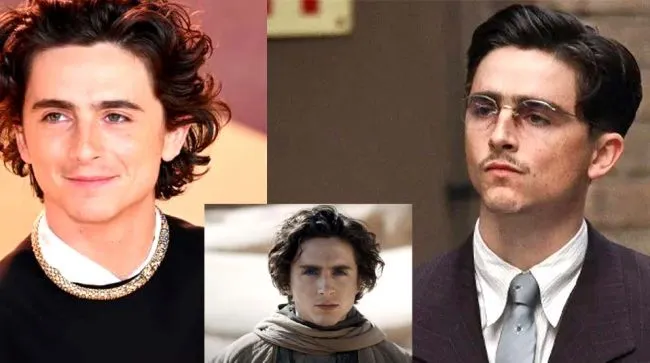
The red carpet is a platform for fashion and availability. For Chalamet, it’s an extension of his film places, a curated performance in itself. His fabulous fashion choices the Haider Ackermann harness, the posterior sanguine jumpsuit, the spangling tableware suit — are not bare outfits; they’re armor and artifice. They’re deliberate statements that roar,” Look at the construction, not the constructor.” He uses fashion to produce a glowing hedge, a spectacle that mesmerizes while it protects. You are n’t seeing Timothée the man; you’re witnessing” Timothée,” the art piece.
3. The Social Media Void In an ecosystem
Where followers are currency, Chalamet’s absence from particular social media is a blaring silence. He has no Instagram to showcase his breakfast, no Twitter to offer off- the- cuff studies. This absence is a monumental power move. It rejects the demand for constant, intimate access.
It means the only casts the public gets are those he explicitly warrants through professional channels a film bill, a magazine cover, a red carpet moment. He controls the orifice, and he keeps it hardly concentrated on the work.
The Alchemy Transforming riddle into captivation
This strategy is n’t creating distance; it’s generating an infectious gravitational pull. The mortal brain is wired to break mystifications, to complete narratives. By furnishing exquisite fractions — a creepy film performance, a cryptic quotation, a stirring sartorial figure — Chalamet makes the public an active party in his story.
We are n’t unresistant consumers of his celebrity; we’reco-authors, filling the blank spaces he designedly leaves.
This transforms addict engagement from consumption to creation. It fosters a deeper, more legendary connection than any reality television- style exposure ever could. He becomes a oil, and his silence is the most compelling color.
The Precedents and The Departure
Chalamet is walking a path illuminated by a many select forerunners, but with a distinctly Gen- Z sensibility.
The Old Guard Mystique numbers like Garbo, who famously” wanted to be alone,” or Brando, who grew to despise the ministry of fame, cultivated riddle frequently through reclusiveness or enmity. Their riddle was, at times, a derivate of misprision.
The Chalamet Model His riddle is n’t born of misanthropy.
But of cultural intentionality. It feels visionary, not reactive. He’s not hiding; he’s sculpturing. He engages warmly with suckers, appears on talk shows with sportful intelligence, but constantly redirects the narrative back to the art, not the artist. He maintains graciousness within the riddle.
The Dune Paradox Epic Scale, Intimate riddle
His part as Paul Atreides in Dune is the perfect conceit for his real- world strategy. Paul is a figure swallowed by vaticination, his particular identity contained by a galactic fortune. He must wear the mask of the Kwisatz Haderach to survive. also, Chalamet navigates the grand scale of ultramodern ballot fame by cloaking his particular nexus in the majestic, archetypal blankets of the characters he plays. The bigger the spectacle, the more he retreats into the saintship of the part, allowing Paul Atreides or Willy Wonka to absorb the bedazzling light of the limelight.
The pitfalls of the Mask Can the Man Breathe?
This high- line act carries essential troubles. The primary threat is empirical suffocation. When the mask is worn so constantly and so impeccably, does the line between the actor and the persona permanently blur? Is there a cost to constantly sublimating the private tone for a public cipher?
The strategy also requires preternatural discipline;
one major, involuntary disclosure( a shooters scoop, a blurted moment) could rupture the precisely maintained facade, potentially damaging the brand erected on control.
likewise, as he periods and maybe seeks different places — a director, a patron, a father — the mask may need to shift or soften. The riddle that serves the youthful, ethereal star may need to evolve for a man in his after chapters.
