

In the global pantheon of comedy, many faces are as incontinently recognizable or widely cherished as that of Mr. Bean.
With his mismatched tweed jacket, skinny red tie, and a vocabulary conforming largely of pained grunts and jejune gaiety , Bean is a monument to silent, physical comedy — a character who transcended language and culture to come a true icon.
For decades, the man who brought him to life, Rowan Atkinson, has been synonymous with this cherished zany, his own public persona frequently blurred with Bean’s endearing, bumbling simplicity.
Yet, in a series of recent, remarkably candid interviews.
Atkinson has pulled back the curtain on his most notorious creation, revealing a perspective that’s as intellectually rigorous as it’s suddenly nipping.
This is n’t a story of fond reminiscence, but a astounding concession Rowan Atkinson views Mr. Bean not as an alter- pride, but as a “ a “ a brutal, lawless, selfish child ” — a incarnation of our basest, mostun-socialized impulses.
The zany, it seems, Rowan has stopped smiling, and the man behind him is issuing a stark warning about the monster we’ve each been cheering for.
The deconstruction of a “ Beast ” Deconstructing Bean’s Dark Core
To understand Atkinson’s cold- eyed analysis, we must rethink Mr. Bean’s “ comedy ” through a new, unyielding lens. Strip down the silly soundtrack and the followership’s fortified horselaugh, and Bean’s conduct reveal a profoundly disturbing pattern.
The Ultimate Narcissist Bean exists in a solipsistic macrocosm where only his immediate solicitations count. Whether it’s stealing a child’s birthday present at a party, cheating spectacularly on an test, or destroying a priceless work of art to avoid a parking ticket, his sole provocation is particular delectation and the avoidance of minor vexation. He exhibits zero empathy, no understanding of social contracts.
A complete casualness for the property, passions, or well- being of others.
lawless, Not Just Awkward His bumbling is n’t accidental; it’s a tool of chaos. Bean does n’t simply fail to fit in; he laboriously dismantles order. Rowan A quiet library, a genteel eatery, a peaceful demesne — these are n’t settings for him to navigate, Rowan but systems for him to loose and collapse. His lawlessness is a quiet, patient rebellion against any form of rule or form.
Readmore A Crossover No One Saw Coming: When Batman’s Bruce Wayne Met Spider-Man’s
The Weaponized incapacity maybe most nipping is how his childlike appearance and acting innocence act as a guard. Society defenses his geste because he appears unhappy.
Rowan But Atkinson suggests this is a minatory facade. Bean’s incapacity is calculated in its issues; it constantly delivers him what he wants while leaving a trail of destruction in his wake. He’s the ultimate “ weaponized unskillful.
Atkinson’s genius was to package this profoundlyanti-social critter in the widely accessible format of silent film slapstick. We laugh at the system — the elaborate Rube Goldberg sequences of failure — without always registering the moral vacuum Rowan at their center.
Atkinson’s Distance The Actor as Clinical Observer
This disclosure explains the palpable distance Atkinson has always maintained from his creation. Unlike other jesters who come their Rowan characters, Atkinson is a regular mastermind of comedy. He has frequently described the process of creating Bean as a specialized challenge in problem- working and physical expression, not an outpour of an inner tone.
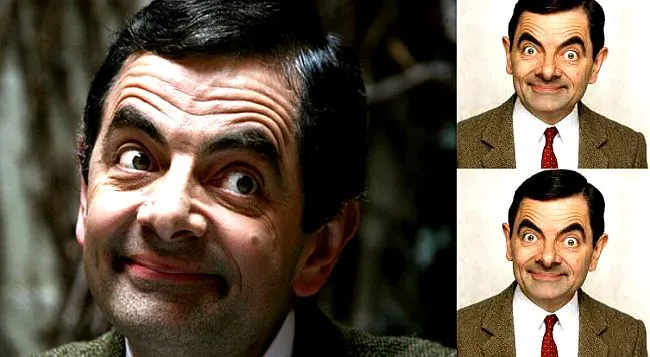
In interviews, he speaks of Bean not with paternal affection, but with the logical detachment of a behavioral psychologist. He has called him “ a child in a overgrown man’s body, ” but clarifies this is n’t a sweet conceit. It’s a clinical opinion a being Rowan trapped in apre-moral state of development, driven by id, unable of superego.
Atkinson’s concession is that he did n’t produce a cherished lug; he created a laboratory-perfect study of unrestrained id, also set it loose in the polite world to see what would be.
Why This Resonates Now Bean in the Age of the tone
Atkinson’s timing in articulating this vision is profoundly reverberative. Mr. Bean rose to fame in the early 1990s, an period still adhering to certain sundries of collaborative society. moment, we live in the Age of the Self — a world curated by social media, driven by particular branding, and frequently marked by a declining emphasis on collaborative responsibility.
Seen through this ultramodern lens, Mr. Bean is no longer just a funny fogy
He’s a dark glass. He’s the ultimate influencer, living a life of pure, unapologetic tone- interest, proved for our recreation. He’s the icon of our secret solicitations to ignore rules, prioritize our own comfort, and condemn our chaos on bare “ awkwardness.
Atkinson’s nipping concession reframes Bean as a exemplary tale. The character’s enduring global fashionability may not just be a testament to great comedy, but a disturbing signal of our collaborative drift toward a more atomized, tone- centered actuality.
Readmore The Crisis Firefighter: How Chris Pratt is Dousing the Flames
We are n’t laughing at a fool; we’re cheering for a monster because he acts out the lawless fantasies we suppress.
The Other Side of Genius Blackadder’s Intellectual Negation
This dark interpretation of Bean is thrown into indeed sharper relief when varied with Atkinson’s other fabulous creation Edmund Blackadder. Rowan Where Bean is all id, Blackadder is all superego — or rather, a superego twisted by cynicism and tone- preservation.
He’s hyperactive- apprehensive of social structures, brilliantly manipulative, and motivated entirely by a cunning, intellectual tone- interest aimed at navigating( and exploiting) a cruel world.
